ICCSAT

About Us

International Center for Climate-Smart Agriculture Technologies Studies Association

Executive Summary

Preparing agriculture for a changing climate

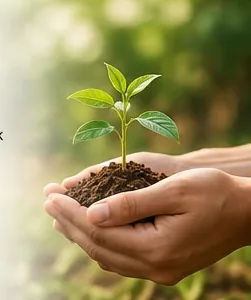
Soil and a seedling held in cupped hands

The International Center for Climate-Smart Agriculture Technologies Studies Association is an international platform that develops innovative solutions to reduce the negative impacts of climate change on agricultural production. We aim to spread innovative technologies and policies that make agricultural production systems sustainable in the global fight against climate change.

Today, agriculture is responsible for roughly one third of global greenhouse gas emissions and uses 70% of freshwater resources. With the world population expected to reach 9.7 billion by 2050, food production must increase by 70%. In this context, our association embraces the climate-smart agriculture (CSA) approach: raising agricultural productivity while simultaneously adapting to climate change and reducing greenhouse gas emissions. According to FAO, climate-smart agriculture addresses food security and climate challenges together, integrating the economic, social and environmental dimensions of sustainable development.

Building on the vision of initiatives such as the Global Alliance for Climate-Smart Agriculture (GACSA), we aim to make food security and nutrition resilient to climate change. To this end, we carry out comprehensive research, capacity building, policy advocacy, technology transfer and pilot projects, and build strategic partnerships with international stakeholders.

Key points

  • Food security and climate change are intertwined; agricultural production is both a source of carbon and vulnerable to climate impacts.
  • Climate-smart agriculture targets productivity, adaptation and mitigation together.
  • The association aims to deliver this triple win through international knowledge sharing, partnerships and policy influence.
  • Our work spans research, capacity building, policy advocacy, technology transfer, pilot projects, monitoring and evaluation, partnerships and fund management.

In line with the requirements highlighted by the IPCC and FAO, our activities focus on scaling up low-carbon and climate-resilient agricultural solutions.

Our Vision

Our vision is to secure global food security and rural development by eliminating the threats climate change poses to agricultural systems. In line with this vision, our priorities are:

  • Increasing agricultural production with climate-smart technologies applicable in all climate and soil conditions,
  • Helping farmers build resilience against climate risks,
  • Spreading low-carbon farming techniques by minimizing greenhouse gas emissions from agricultural production.

To this end, we aim to build a strong cooperation network of governments, universities, the private sector and civil society, producing comprehensive knowledge sharing and joint projects.

Our Mission

Our mission is to support sustainable agricultural development by bringing climate-smart agriculture technologies and practices to a wide audience. Within this framework, we:

  • Conduct R&D and extension work on next-generation agricultural technologies (remote sensing, precision agriculture, digital farming applications, climate-resilient seeds, etc.),
  • Organize training and capacity-building programmes for farmers, academics and decision-makers,
  • Advocate for the effective implementation of national and international climate policies in agriculture,
  • Create funding sources and grants that increase green finance and investment opportunities in agriculture,
  • Apply to international funding channels (such as the Green Climate Fund, IFAD and UNDP) for climate-friendly agricultural projects,
  • Design pilot projects to replicate success stories of sustainable agricultural technologies.

As emphasized by FAO and the IPCC, reshaping and coordinating agricultural policies in light of climate change is a critical need. The association supports concrete initiatives by bringing together the knowledge and resources of different stakeholders.

Our Core Values

  • Science and Innovation: All our projects and programmes are grounded in the latest scientific evidence; we encourage innovative technologies.
  • Inclusiveness: From farmers to public institutions, from the private sector to academia, every stakeholder’s view carries equal weight. Amplifying the voices of disadvantaged groups is our priority.
  • Sustainability: We offer solutions that balance economic development, social justice and environmental protection.
  • Transparency and Accountability: All financial transactions, projects and partnerships are conducted transparently, with regular reporting to stakeholders.
  • Cooperation: With a culture of partnership and networking, we build strong national and international collaborations.

Our Strategic Goals

Our strategy sets out the following key goals to scale up climate-smart agriculture across the world in the long term:

  • Higher Productivity: Raising agricultural productivity to increase the incomes of smallholders and rural communities.
  • Resilience and Adaptation: Strengthening the resilience of farmers and farming systems against drought, floods, disease and other climate shocks.
  • Emission Reduction: Reducing the carbon footprint of agricultural production and deforestation; increasing carbon sequestration in soils and plants.
  • Policy and Finance: Transforming agricultural policies within a climate-smart framework, strengthening stakeholder capacity and mobilizing climate adaptation and mitigation funds.
  • Knowledge and Innovation: Continuously updating our knowledge base by promoting knowledge generation and dissemination in agri-tech, digital agriculture and R&D.

These goals follow the triple win approach defined by GACSA: increased productivity, climate resilience and reduced emissions. Concrete milestones and impact indicators are defined for each goal and guide annual planning and monitoring.

Join Our Network

Let's shape the future of climate-smart agriculture together.

Researcher, farmer, institution or company: by sharing our knowledge, experience and resources, we are building a stronger farming ecosystem.